
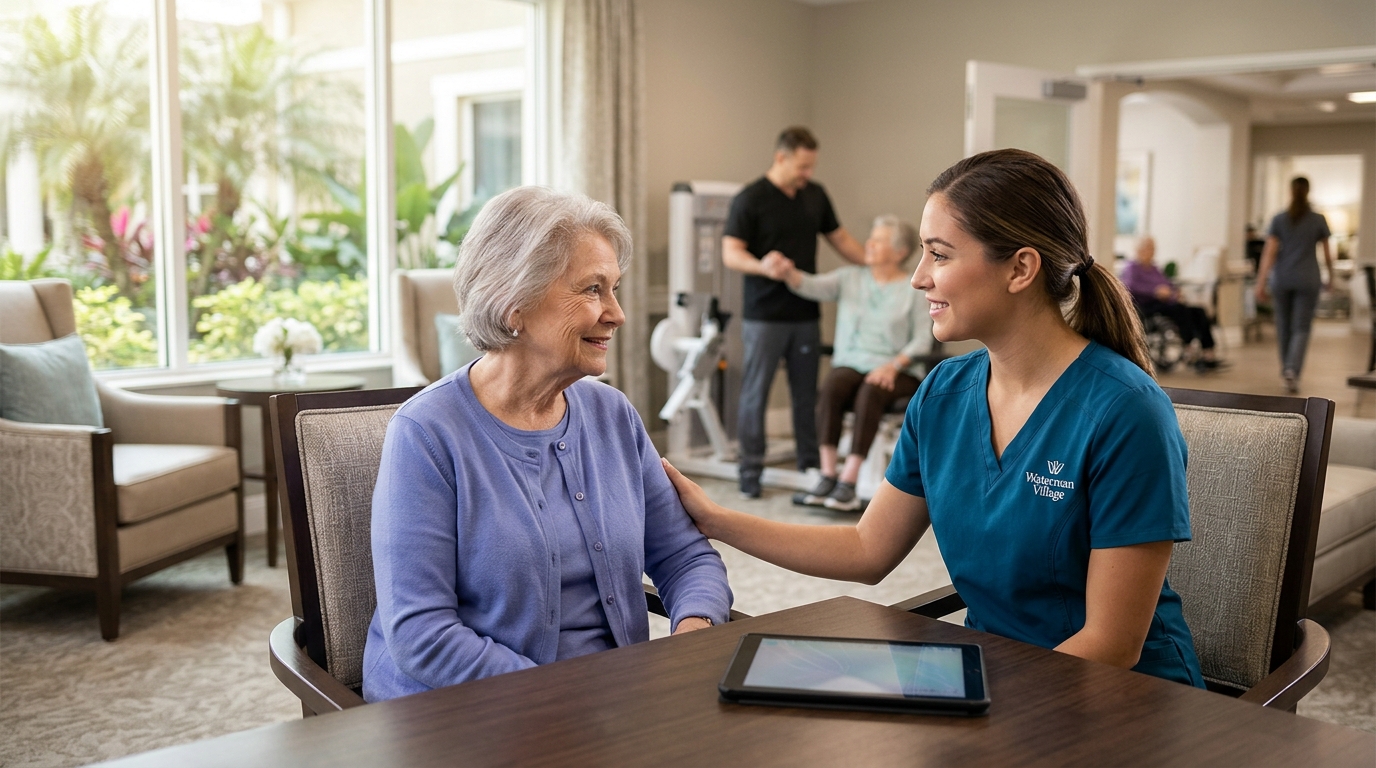
Choosing a skilled nursing facility near Orlando requires looking beyond basic room amenities to evaluate the depth of clinical care and rehabilitation support. Families often struggle to distinguish between facilities that merely house residents and those that actively restore independence. Waterman Village, a not-for-profit campus in Mount Dora, offers a transparent model for what high-quality skilled nursing looks like in Central Florida. This guide outlines the critical features you should verify during your tour to ensure your loved one receives the best possible post-hospital care.
1. Medicare Star Ratings and Quality Metrics
Verify the facility's current CMS star rating and specific quality scores. The Centers for Medicare & Medicaid Services (CMS) rates facilities on a five-star scale based on health inspections, quality of care, and safety. A skilled nursing home is a licensed facility that provides 24-hour nursing care and rehabilitation services. You should look for a facility that maintains a high overall rating, as this reflects consistent performance across multiple data points rather than a single good year. Waterman Village's Edgewater Health and Rehabilitation Center is rated 5 stars by CMS for quality measures, indicating top-tier performance in the region.
2. On-Site Rehabilitation Therapy Teams
Confirm the presence of dedicated physical, occupational, and speech therapy staff. Rehabilitation is the primary goal for most short-term nursing residents, aiming to return them to their homes or independent living. A robust therapy department includes certified therapists who specialize in stroke recovery, joint replacement, and balance training. At Waterman Village, the outpatient therapy clinic and inpatient rehab teams work collaboratively, ensuring that residents receive continuous care whether they are in the nursing center or transitioning to independent living.
3. Not-for-Profit Ownership Structure
Investigate whether the facility is owned by a not-for-profit organization. A not-for-profit organization is a legal entity that operates for charitable, educational, or religious purposes rather than to generate profit for shareholders. Studies suggest that not-for-profit facilities often reinvest earnings into staff training and resident care, leading to better outcomes. Waterman Village is a 501(c)(3) not-for-profit ministry, meaning its mission is to help residents live their best lives rather than maximize investor returns. This structure often results in greater stability and a stronger focus on compassionate care.
4. Continuum of Care on One Campus
Assess if the nursing center is part of a larger campus with independent and assisted living. A continuum of care is a model where a single campus offers multiple levels of support, from independent living to skilled nursing. This integration allows for seamless transitions as a resident's needs change, avoiding the stress of moving to an unfamiliar facility. Waterman Village houses independent living, assisted living, memory care, and skilled nursing on one secure campus. This proximity means families can visit one location for all levels of care, and residents can easily move between levels without leaving the community.
5. Staff Stability and Local Management
Ask about staff turnover rates and whether management is on-site. High staff turnover can disrupt care plans and reduce the quality of daily interactions. A locally managed facility is one where decision-makers and leadership are physically present at the site, rather than remote corporate offices. Waterman Village is 100% locally operated, with all management working on-site. This local autonomy allows for quicker decision-making and a deeper connection to the community, which often translates into more personalized and responsive care for residents.
6. Culinary Services and Dietary Support
Review the dining program and the role of registered dietitians. Nutrition is a critical component of recovery and overall health in skilled nursing. A skilled nursing facility is a healthcare setting that must meet specific dietary and safety standards for its residents. Look for facilities where meals are supervised by an executive chef and a registered dietitian to ensure nutritional needs are met. The Edgewater at Waterman Village provides culinary services supervised by these professionals, offering varied menus that support resident health and enjoyment.
7. Family Involvement and Visitation Policies
Evaluate how the facility encourages family participation in the care process. Family engagement is a key factor in resident well-being and successful rehabilitation. A supportive environment is one that welcomes family input and provides clear communication channels. Waterman Village emphasizes open communication, with department heads keeping families informed about resident progress. The facility also offers a range of activities and events that families can join, fostering a sense of community and connection that extends beyond the clinical setting.
Choosing the Right Facility
When comparing options, prioritize facilities that combine high clinical ratings with a not-for-profit mission and a continuum of care. Look for transparency in how they handle staff management and family communication. A facility that invests in its community and its people is more likely to provide the compassionate, high-quality care your loved one deserves.
Frequently Asked Questions
What is the difference between skilled nursing and assisted living?
Skilled nursing provides 24-hour medical care and rehabilitation for residents with complex health needs, while assisted living helps with daily activities like bathing and meals for those who are more independent. Skilled nursing is typically for short-term recovery or long-term care for those with significant medical conditions.
Does Waterman Village accept Medicare for skilled nursing?
Yes, the Edgewater Health and Rehabilitation Center at Waterman Village is Medicare certified. This means it can accept Medicare for eligible short-term rehabilitation and long-term care services, subject to Medicare's coverage rules and eligibility requirements.
How long can a resident stay in skilled nursing?
Stays can range from a few weeks for post-hospital rehabilitation to several years for long-term care. The length of stay depends on the resident's medical condition, progress in therapy, and insurance coverage. Waterman Village supports both short-term rehab and long-term nursing needs.
Can family members visit the skilled nursing center at Waterman Village?
Yes, family members are encouraged to visit. Waterman Village has a staffed gatehouse and welcomes visitors who follow the facility's visitation guidelines. The community's open-door policy allows families to be involved in their loved one's care and daily life. according to Elderhood and Aging
Is the Edgewater at Waterman Village a 5-star facility?
Yes, the Edgewater Health and Rehabilitation Center is rated 5 stars by the Centers for Medicare & Medicaid Services for quality measures. This rating reflects its performance in health inspections, quality of care, and safety, placing it among the highest-rated nursing homes in Central Florida.
How does the not-for-profit status of Waterman Village affect care?
As a not-for-profit organization, Waterman Village reinvests its resources into resident care and staff development rather than paying dividends to shareholders. This mission-driven approach often leads to a stronger focus on compassionate, high-quality care and community engagement.
Next Steps
To learn more about the skilled nursing services and rehabilitation programs at Waterman Village, to schedule a tour of the Edgewater Health and Rehabilitation Center.