
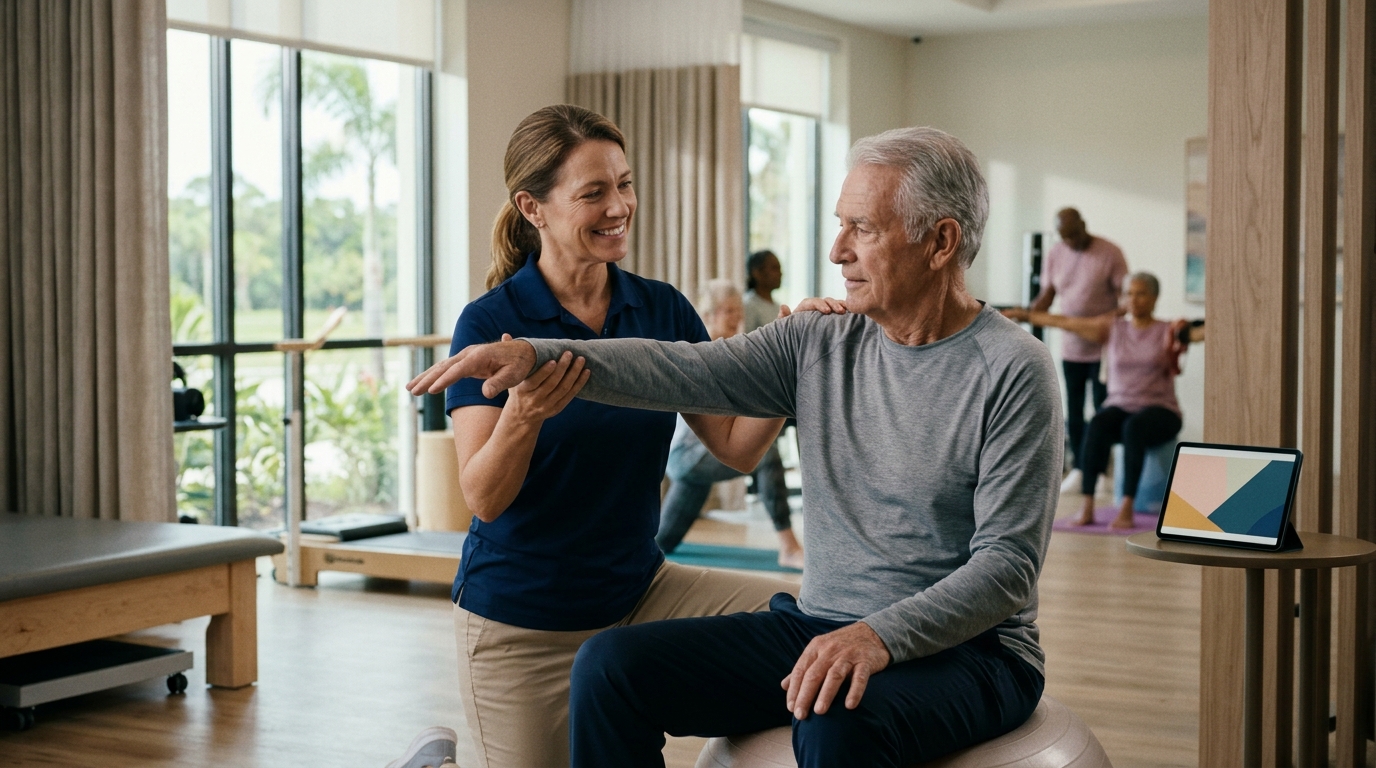
Therapy services in senior living communities evolve as residents age, shifting from acute rehabilitation to long-term maintenance. Understanding these stages helps families and seniors plan for a continuum of care that supports independence. Waterman Village provides a full spectrum of these services on one campus, ensuring that residents receive the right type of support at the right time.
1. Acute Post-Hospital Rehabilitation
Immediate, intensive therapy following a hospital stay is the first critical stage. After an injury or illness, primary care providers often refer patients to therapy to help them return to their previous level of function. This stage is typically the most intensive, focusing on regaining basic mobility and strength. At Waterman Village, the Edgewater Health & Rehabilitation Center provides skilled nursing and rehab services for residents who need this high level of care immediately after discharge.
2. Outpatient Physical Therapy
Physical therapy focuses on evaluating and improving movement dysfunctions to treat specific injuries. Once a resident is stable, they often transition to outpatient physical therapy. This discipline uses tools like ultrasound, electrical stimulation, and manual techniques to directly treat injured tissues. Physical therapists at Waterman Village specialize in lower extremity issues, such as foot, knee, back, and hip injuries, as well as vestibular and balance therapy to prevent falls.
3. Outpatient Occupational Therapy
Occupational therapy focuses on improving functional abilities and daily living skills. While physical therapy targets the injury itself, occupational therapy helps residents resume normal activities. An occupational therapist works with a person to improve their ability to live independently after an illness. This stage is crucial for seniors who need to relearn how to perform daily tasks, such as dressing or cooking, safely and efficiently.
4. Speech and Language Therapy
Speech therapy addresses communication, swallowing, and cognitive challenges. Many seniors experience changes in their ability to speak or swallow due to conditions like stroke or neurological disorders. Speech therapy can be utilized with an order from a physician to improve speaking, voice, and swallowing problems. This stage is vital for maintaining social connection and nutritional safety, ensuring residents can communicate effectively and eat without risk of aspiration.
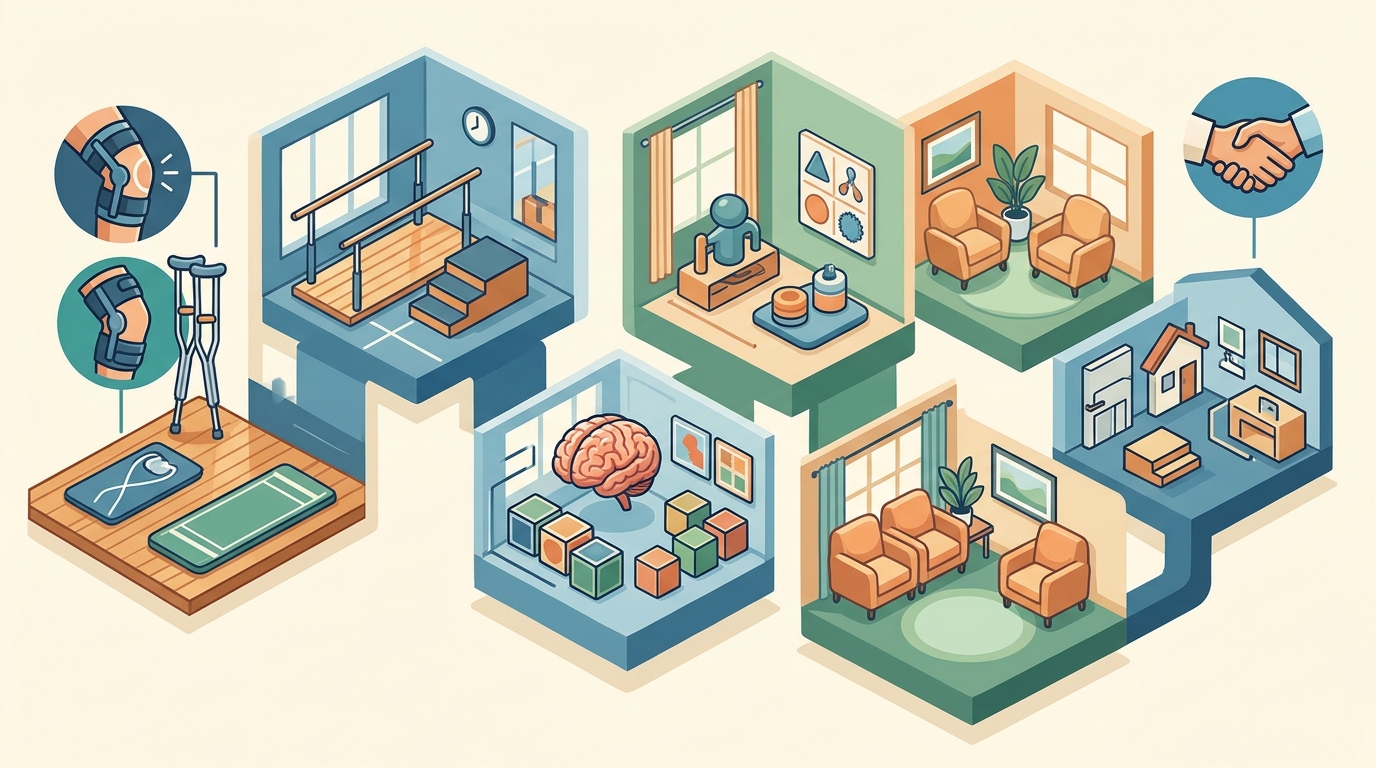
5. Neurological and Cognitive Rehabilitation
Specialized therapy for conditions like Parkinson’s, stroke, and dementia requires a dedicated approach. As seniors age, neurological conditions may progress, requiring more targeted interventions. Waterman Village offers services for neurological therapy, including Parkinson’s training and stroke rehab. These programs are designed to help residents manage symptoms and maintain cognitive function for as long as possible, often in coordination with memory care services.
6. Wellness and Preventive Maintenance
Preventive wellness programs help maintain health and prevent future declines. After acute issues are resolved, the focus shifts to maintaining current abilities. This stage includes fitness classes, balance training, and brain wellness activities. Waterman Village’s Brain Wellness Academy for Seniors, for example, uses relaxation and physical exercises to stimulate the brain and improve mental health. This proactive approach helps residents stay active and independent, reducing the need for higher levels of care in the future.
7. Home Health and Private Duty Support
Home health services extend therapy and care into the resident’s private living space. For residents who prefer to stay in their apartments or homes, home health agencies provide nursing, therapy, and aide services. Waterman Village Home Care is a Medicare-certified agency that offers these services to residents on campus and in the surrounding Lake County area. This stage ensures that residents receive consistent support in a familiar environment, promoting comfort and continuity of care.
Choosing the Right Stage of Care
When selecting therapy services, consider the resident’s current health status and goals. Acute rehab is for immediate post-hospital needs, while outpatient therapy is for ongoing management. Wellness programs are best for maintaining independence. Waterman Village offers all these stages on one campus, making it easy to transition between levels of care as needs change.
Frequently Asked Questions
What is the difference between physical and occupational therapy?
Physical therapy focuses on movement and treating injuries, while occupational therapy focuses on functional abilities and daily living skills. Both are essential for recovery, but they address different aspects of a resident’s health.
Does Waterman Village offer speech therapy?
Yes, Waterman Village offers speech therapy as part of its outpatient therapy clinic. This service can be utilized with an order from a physician to address speaking, voice, and swallowing problems.
Can residents receive therapy in their apartments?
Yes, Waterman Village Home Care provides home health services, including therapy, in residents’ apartments. This allows for care in a familiar and comfortable environment.
How often will I get therapy?
Frequency depends on individual needs, but residents can usually expect 2-5 days per week for 45-60 minute sessions. The schedule is determined during an initial evaluation by the therapist.
Is therapy included in the monthly service fee?
Wellness and fitness classes are included in the monthly service fee. Outpatient therapy services, such as physical, occupational, and speech therapy, are typically provided as private pay or through insurance, depending on the resident’s coverage.